
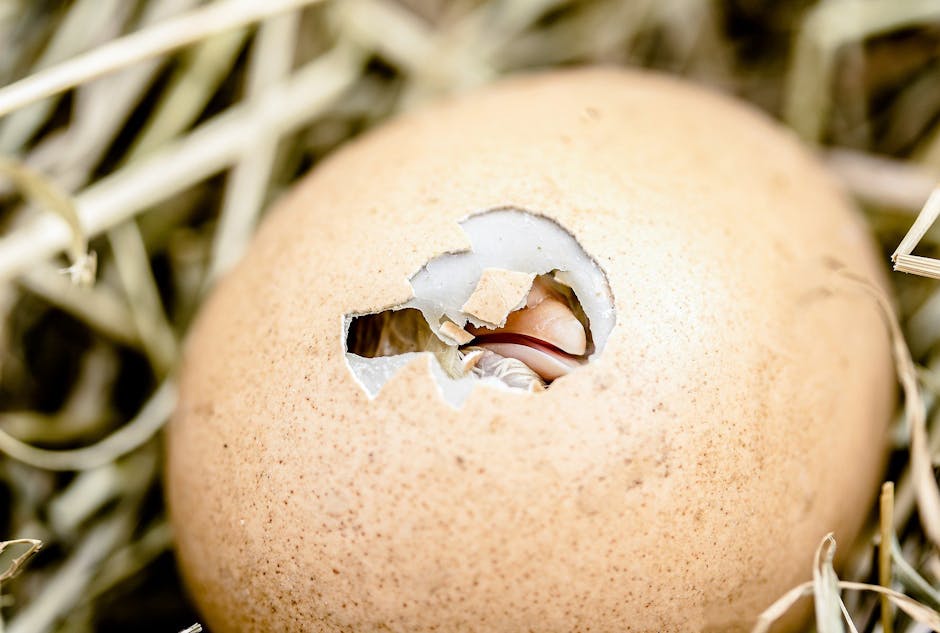
The intricate journey of life, from a single cell to a complex organism, has always captivated human curiosity. For centuries, the chicken egg, a readily available and fascinating model, has served as a window into the mysteries of embryological development. However, imagine transcending the shell, removing the top layer, and observing the miracle unfold in a controlled, external environment. This practice, often referred to as “ex-ovo development” or more colloquially, observing “chicken egg top of shell removed develop,” is not merely a parlor trick but a powerful tool in scientific research, education, and potentially, future agricultural innovation.
As we step into 2025, the techniques and understanding surrounding this unique experimental setup have evolved significantly, offering unprecedented insights into avian biology. This article delves into the science, methods, ethical considerations, and future implications of studying chicken embryo development outside its natural confines.
The Science Behind Ex-Ovo Development
Ex-ovo development, literally meaning “out of the egg,” involves carefully transferring a fertilized chicken embryo from its shell into a sterile, artificial culture environment. This environment typically consists of a petri dish or a specialized container lined with a nutrient-rich medium that mimics the conditions inside the egg. The goal is to provide the necessary support for the embryo to continue its development, allowing for direct, uninterrupted observation.
The concept isn’t entirely new; scientists have experimented with similar techniques for decades. Early attempts were often met with limited success due to issues like contamination, improper nutrient balance, or difficulties in maintaining a stable environment. However, advancements in sterile techniques, media formulations, and incubator technology have dramatically improved viability rates, making it a more accessible and reliable method for research and educational purposes.
Why Study Development Outside the Shell?
Observing a chicken egg top of shell removed develop offers several compelling advantages over traditional incubation methods:
- Unobstructed Observation: The most immediate benefit is the ability to directly view and record the developmental stages in real-time, without disturbing the embryo or relying on candling. This clarity allows researchers to pinpoint critical moments of organogenesis, blood vessel formation, and limb development.
- Controlled Manipulation: Removing the shell provides an unparalleled opportunity to introduce substances, perform microsurgery, or apply various stimuli directly to the embryo. This is invaluable for understanding gene function, the effects of specific compounds, or the impact of environmental factors on development.
- Educational Tool: For students, witnessing an embryo develop from a blastoderm to a recognizable chick offers a profound, hands-on learning experience. It transforms abstract biological concepts into a tangible, observable process, fostering a deeper understanding of life sciences.
- Disease Modeling: Ex-ovo cultures can serve as models for studying developmental disorders, viral infections, or the efficacy of new drugs. Researchers can introduce pathogens or therapeutic agents and observe their effects on the developing organism.
The Process: How to Observe “Chicken Egg Top of Shell Removed Develop”
Successfully observing a chicken egg top of shell removed develop requires meticulous attention to detail, sterility, and proper environmental control. While sophisticated labs use advanced equipment, the fundamental steps can be adapted for educational settings with careful planning.
Essential Equipment and Materials
- Fertilized Eggs: Fresh, healthy, fertile eggs are paramount. Ideally, they should be incubated for 24-72 hours beforehand to allow initial development (blastoderm formation) to occur.
- Incubator: A reliable incubator capable of maintaining precise temperature (around 37.5°C or 99.5°F) and humidity (60-70%) is crucial.
- Sterile Workstation: A clean, disinfected area is non-negotiable to prevent bacterial or fungal contamination, which is the leading cause of failure. A laminar flow hood is ideal, but a meticulously cleaned space with disinfected tools can suffice for simpler setups.
- Culture Vessels: Sterile petri dishes (100mm x 15mm) or larger, clear glass bowls are commonly used.
- Nutrient Medium: A balanced physiological saline solution, sometimes supplemented with albumen or specialized commercial media, is used to support the embryo.
- Sterile Instruments: Scissors, forceps, and a spoon or ladle (for transferring the embryo).
- Disinfectants: 70% ethanol or isopropyl alcohol.
- Plastic Wrap/Parafilm: To cover the culture vessel and maintain humidity.
Step-by-Step Procedure
- Pre-incubation: Incubate fertilized eggs for 24-72 hours. This allows the embryo to develop sufficiently to be visible and more robust for transfer.
- Sterilization: Sterilize all equipment, culture vessels, and the workstation thoroughly. This step cannot be overemphasized.
- Egg Preparation: Gently wipe the eggshell with 70% ethanol and let it air dry. Create a small hole at the wide end of the egg (air sac) to release pressure.
- Shell Removal: Carefully crack the egg around its equator or gently tap and peel back the top portion of the shell, exposing the yolk sac and embryo. The goal is to remove the shell without rupturing the vitelline membrane surrounding the yolk.
- Embryo Transfer: Using a sterile, broad spoon or ladle, gently scoop the entire yolk and embryo, along with the albumen, into the prepared culture vessel. Position the embryo so it is easily viewable.
- Seal and Incubate: Cover the culture vessel tightly with sterile plastic wrap or Parafilm to prevent desiccation and maintain humidity. Place the vessel in the incubator.
- Observation and Maintenance: Check the embryo daily. Look for blood vessel development, heartbeats, and morphological changes. Maintain incubator conditions rigorously. Contamination or desiccation will halt development quickly.
Challenges and Pitfalls
Despite advancements, challenges persist. Contamination by bacteria or fungi is the most common issue. Desiccation (drying out) due to insufficient humidity or poor sealing is another frequent problem. Even with perfect technique, not all embryos will thrive ex-ovo, reflecting the delicate nature of early development. Furthermore, observing the intricate details requires patience and a keen eye, similar to how complex systems, like the precision operations that might lead to a united airlines flight ua770 emergency diversion, often present unforeseen complications despite rigorous planning.
2025 Trends and Advancements in Ex-Ovo Cultivation
As we move further into the 21st century, the field of ex-ovo development is seeing significant innovation. Researchers are leveraging cutting-edge technologies to enhance viability, extend observation periods, and unlock new possibilities. These trends are shaping the future of how we observe and manipulate embryonic life.
Advanced Imaging and Monitoring
In 2025, high-resolution live imaging systems coupled with AI-powered analysis are becoming standard in advanced embryology labs. These systems can track subtle cellular movements, blood flow dynamics, and organ development with unprecedented precision. This allows for quantitative data collection on developmental milestones and the impact of various interventions, offering profound insights into avian developmental biology breakthroughs.
Improved Culture Media and Scaffolds
Beyond simple saline solutions, sophisticated, serum-free media formulations are being developed. These media provide optimal nutrient ratios, growth factors, and signaling molecules tailored to specific developmental stages, significantly improving long-term viability of chicken egg top of shell removed develop experiments. Biodegradable scaffolds or hydrogels are also being explored to provide a more physiologically relevant three-dimensional environment for the embryo, mimicking the mechanical support of the shell and albumen.
CRISPR and Gene Editing Applications
The ability to culture embryos ex-ovo seamlessly integrates with gene-editing technologies like CRISPR. Researchers can introduce genetic modifications at early stages and then observe their phenotypic effects directly as the embryo develops. This accelerates functional genomics studies and aids in understanding the role of specific genes in development, disease, and trait expression.
Robotics and Automation
For high-throughput studies, automated systems are emerging that can handle egg preparation, transfer, and even daily media changes or imaging. Robotics minimizes human error and contamination risk, allowing for large-scale experimental designs that were previously impractical. This automation is crucial for screening potential therapeutic compounds or environmental toxins.
Ethical Considerations and Responsible Practice
While the scientific potential of observing chicken egg top of shell removed develop is immense, ethical considerations are paramount. As embryos develop into more complex structures and eventually sentient beings, questions surrounding welfare and moral status arise. Responsible practice dictates a clear ethical framework:
- Purpose-Driven Research: Experiments should have a clear scientific or educational objective that justifies the use of animal embryos. Frivolous or purely observational experiments without significant learning outcomes should be avoided.
- Minimizing Discomfort: While embryos do not experience pain in the same way as hatched animals, efforts should be made to ensure optimal conditions to prevent unnecessary stress or developmental abnormalities.
- Defined Endpoints: Experiments should have a predetermined endpoint, typically before the embryo reaches a stage where it could experience pain or exhibit complex behaviors (e.g., usually before hatching, often around day 10-14 for chickens). Euthanasia should be performed humanely if the experiment is terminated early.
- Regulatory Compliance: Adherence to national and institutional animal welfare guidelines (e.g., IACUC protocols in the US) is essential for any research involving animal embryos.
Future Outlook: Beyond the Shell
The field of “chicken egg top of shell removed develop” holds exciting prospects beyond fundamental embryological research. Looking towards 2025 and beyond, several potential applications are emerging:
- Lab-Grown Poultry: The ex-ovo technique could contribute to the development of cultured meat. If viable long-term embryo culture becomes scalable, it could potentially lead to ethical and sustainable methods for producing poultry tissue without requiring hatched animals.
- Space Biology: The ability to study avian development in controlled, external environments makes ex-ovo systems ideal for experiments in microgravity or radiation, paving the way for understanding how life adapts in extraterrestrial conditions.
- Conservation Biology: For endangered avian species, ex-ovo techniques could provide a pathway for assisted reproduction, offering a controlled environment to rescue fragile embryos or study developmental issues without the risks associated with natural incubation.
- Drug Discovery and Toxicology: The embryo’s rapid development and sensitivity to external factors make it an excellent model for screening new pharmaceutical compounds for developmental toxicity or therapeutic effects, offering an alternative to mammalian models in early stages.
In conclusion, the ability to observe a chicken egg top of shell removed develop is far more than a laboratory curiosity. It represents a powerful, evolving scientific technique offering unparalleled insights into the fundamental processes of life. As technology advances and ethical considerations mature, ex-ovo development will continue to be a cornerstone of embryological research, an inspiring educational tool, and a promising avenue for addressing future challenges in food security, medicine, and environmental conservation.
FAQ
Is it ethical to remove the top of a chicken egg to observe development?
Ethical considerations are paramount. While early embryos are not considered sentient, experiments should have a clear scientific or educational purpose, be conducted under sterile conditions to minimize distress, and adhere to animal welfare guidelines, typically terminating before the embryo reaches a stage capable of pain (e.g., generally before day 10-14 for chickens).
How long can a chicken egg develop outside its shell?
With current techniques, chicken embryos can be maintained ex-ovo for up to 10-14 days, occasionally longer under optimal laboratory conditions. Full development to hatching outside the shell remains a significant challenge due to the complex requirements for sustained growth and nutrient exchange.
What are the main challenges when trying to develop a chicken egg with the top of its shell removed?
The primary challenges include preventing microbial contamination (bacteria or fungi), maintaining proper humidity to prevent desiccation, providing a balanced nutrient medium, and ensuring stable temperature control. The delicate nature of the early embryo also makes transfer a critical step.
Can I do this experiment at home?
While the basic concept can be demonstrated, achieving sustained development of a chicken egg top of shell removed develop outside a laboratory setting is extremely challenging due to the strict requirements for sterility, precise temperature and humidity control, and specialized nutrient media. It’s best suited for educational institutions or research facilities with proper equipment and expertise.
What are the practical applications of studying “chicken egg top of shell removed develop” in 2025?
In 2025, practical applications include enhanced educational programs, advanced embryological research (e.g., gene editing studies, disease modeling), screening for developmental toxicity of new compounds, and potential contributions to future lab-grown meat technologies and even space biology research.


